

SCARCITY REQUIRES FOLLOW-THROUGH
This article is provided for general informational and educational purposes only and does not constitute legal, financial, tax, valuation, or professional advice.
Scarcity is not a result of restriction. It's not about how many works physically exist.
An artist can produce very little and still fail to create meaningful scarcity if the work is poorly documented, weakly positioned, inconsistently presented, or placed without long-term consideration. Art history repeatedly shows that the artists who endure are rarely remembered because they made less.
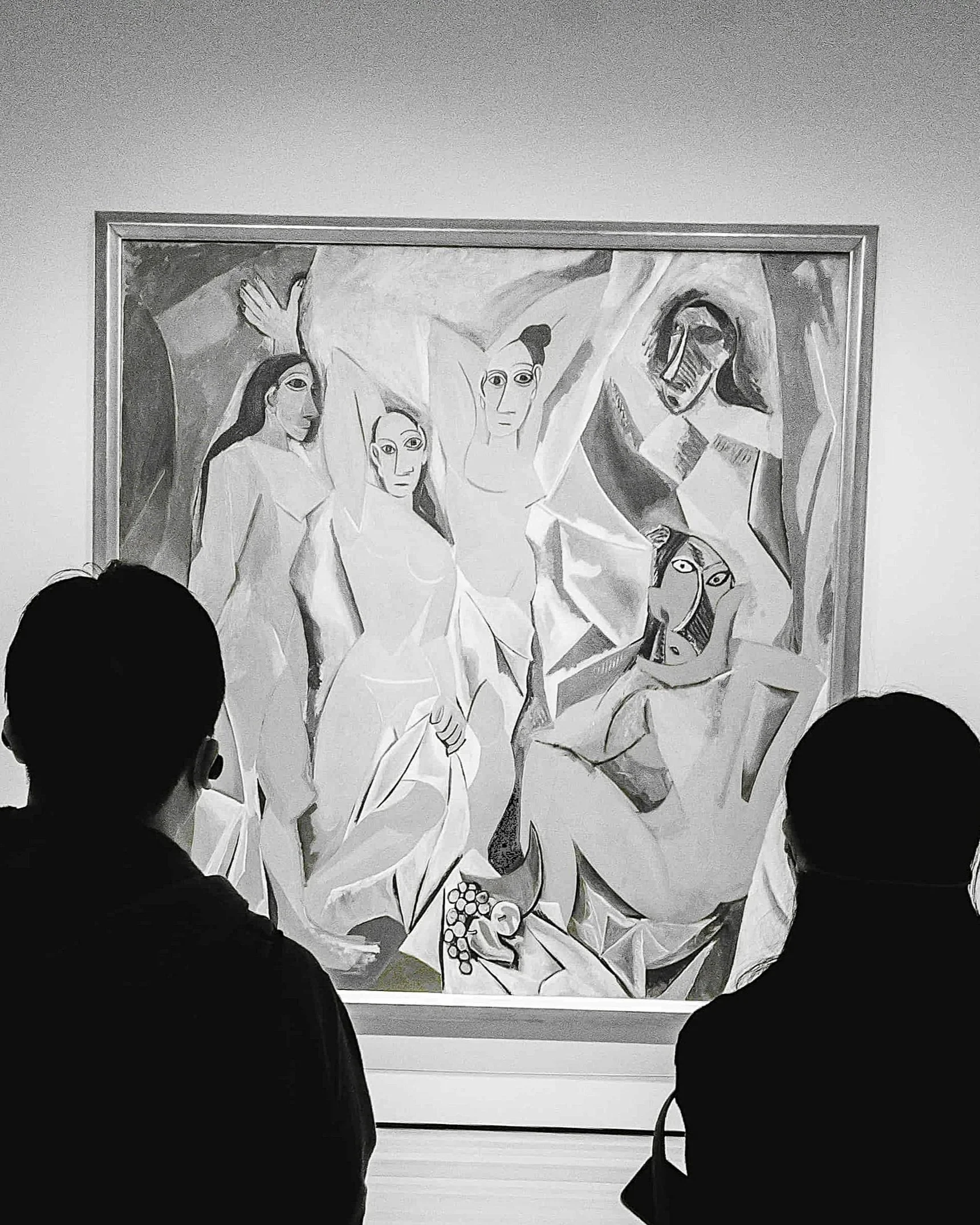
Picasso’s importance was not built on limited output, but on the power, influence, and recognizability of his visual language.
When Picasso died, his estate inventory included more than 45,000 works, including 1,885 paintings, 1,228 sculptures, 7,089 drawings, 30,000 prints, 150 sketchbooks, and 3,222 ceramic works, according to Vanity Fair’s reporting on the Picasso estate by Milton Esterow, entitled “The Battle for Picasso’s Multi-Billion-Dollar Empire.”
Artists are remembered most often when their work is traceable and significant within a larger cultural and visual language. Joan Miró’s work remains powerful not because of scarcity alone, but because his symbols, constellations, biomorphic forms, and poetic visual language created a world that was unmistakably his own. Jean-Michel Basquiat’s crowns, heads, text, anatomical references, and layered marks continue to carry weight because they are tied to a language, a mythology, a cultural moment, and a point of view that remain impossible to confuse with anyone else’s. Their work evolved alongside their market. That is the distinction.
Genuine scarcity is shaped by several simultaneous factors. It comes from selectivity around which works enter the market, how they enter, and where, and it is strengthened when important works are placed in museums, major foundations, respected private collections, or other low-turnover contexts that reinforce significance. It is supported by narrative cohesion, provenance, documentation, history, critical writing, and archival care. It is intensified when an artist’s most powerful ideas are concentrated in a body of work strong enough to carry emotional, symbolic, and cultural weight.
This is where many artists unintentionally weaken their own market. They overproduce without a clear hierarchy. They release too much without sufficient context or strategy. They create editions that are too large. They neglect documentation and archiving. They move from one thing to the next without building a recognizable arc. They focus too much on opportunistic short-term sales.
To the artist, it can just look like selling, showing, posting, experimenting, and staying visible. But over time, the market may struggle to understand what the artist stands for, which works matter most, and why a direction deserves attention.
Scarcity requires a commitment to stewardship. For an artist, follow-through can look like strategically releasing artwork rather than simply making everything available at once. It may require aligning with relevant partners in advance. It could involve deciding which works should be placed first, which should be reserved for the artist's personal archive, and which should remain on hold for future opportunities.
It also has to do with treating documentation as an integral part of the practice and never an afterthought. Photography, video, cataloging, condition reports, installation images, detail images, records, writing, press, and organization are not merely administrative tasks. They determine whether the work can be understood, remembered, evaluated, and carried forward.
The artists who endure build a visual and conceptual language strong enough to develop over time without losing its center. For living artists, this is not theoretical. A body of work may receive interest, but if it is not documented, written about, placed carefully, revisited, and connected to the larger arc of the practice, the opportunity can disappear before it matures. A collector may respond aesthetically but never understand why the work matters within the artist’s larger direction.
Scarcity also requires discipline. Not every commission should be accepted. Not every collaboration should be pursued. Not every work should be released immediately. Not every opportunity that creates revenue strengthens the long-term value of the practice.
Artists who understand scarcity are selective and protect the strongest work from weak contexts. They build narrative around the practice. They treat their archive, collector relationships, documentation, and story as core assets. They measure success not by short-term sales, but by whether their best work will be carried forward, and this protects the artist’s collector base as well. Collectors are buying into a practice, a direction, and a belief that the artist will continue moving forward with conviction. When an artist exhibits discipline, clarity, documentation, continuity, and restraint, confidence surrounding the work grows.
The artists who endure are deliberate. They understand scarcity is not about making less. It is about making what exists matter more.
Citation: Milton Esterow, “The Battle for Picasso’s Multi-Billion-Dollar Empire,” Vanity Fair, March 7, 2016.If you are a professional artist committed to elevating your position in the global art market who values autonomy, independence, and long-term growth, we invite you to share more about your aspirations and practice.
Private Art Consulting (PAC) is a Miami-based strategic consultancy and art advisory, with strong roots in New York & Los Angeles, serving art collectors, brands, developers, architects, interior designers, and professional artists.
Our Specialties Include:
- Independent, buyer-side art acquisition advisory for art collectors and institutions.
- Expert art sourcing, visual storytelling, and site-specific art curation across residential, hospitality, and commercial projects.
- Art-led creative marketing, branding, digital campaigns, partnerships, collaborations, and activations for brands.
- Strategic growth support for professional artists.
